
Over the past few years, the events industry has learned how quickly global conditions can change – especially when it comes to global hybrid event planning.
That reality is coming back into focus. We are already seeing early signs of events being reconsidered or moved from locations that were previously viewed as safe havens, including parts of the UAE, as organisers respond to rising geopolitical tensions across the Middle East.
In fact, one of our own clients recently made the decision to relocate their event from Dubai to London – a clear example of how quickly risk profiles can shift, even for well-established destinations.
Alongside this, concerns around aviation fuel supply and the potential for wider travel disruption are beginning to surface. For organisations responsible for global event planning, it creates a familiar challenge: how do you plan with confidence when so much is outside your control?
It’s a situation that echoes the early days of COVID-19. But there’s a key difference this time – the industry is far better prepared, with hybrid events now playing a central role in how risk is managed.
The hidden risk in global event planning
Large-scale conferences and international events rely heavily on one thing: people being able to travel.
When that assumption is challenged – whether due to conflict, airspace restrictions, or fuel shortages – the impact is immediate:
- reduced attendance
- last-minute speaker cancellations
- increased costs
- and, in worst cases, event viability being questioned
For organisations investing significant budget into global events, that level of risk is hard to ignore.
What COVID taught us about resilience
During the pandemic, hybrid and virtual events moved from a “nice to have” to a business-critical solution almost overnight.
They enabled:
- continuity of communication
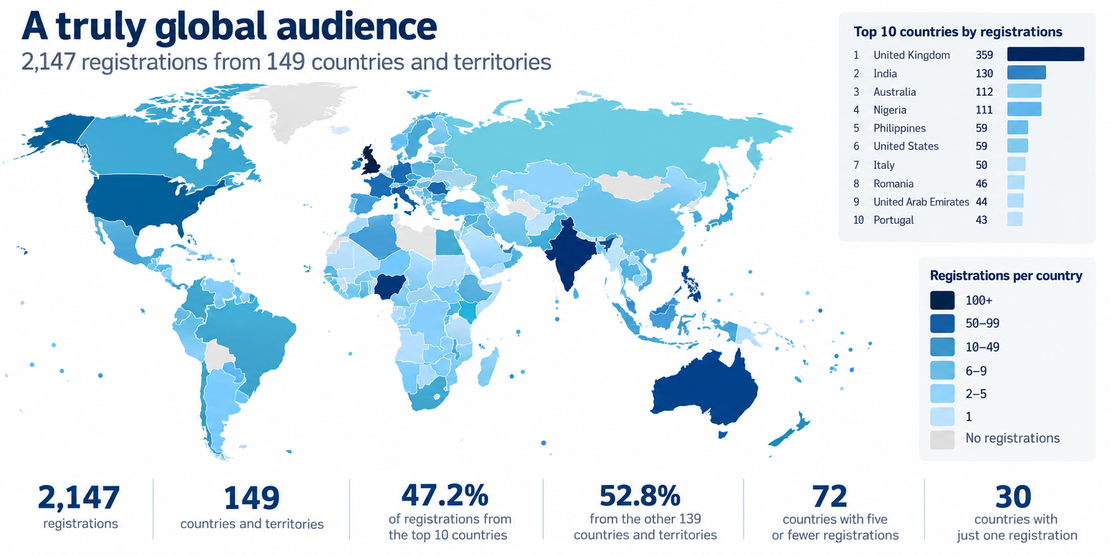
- global audience reach despite restrictions
- ongoing revenue generation
- and brand visibility during uncertain times
In many ways, digital event production kept industries moving when physical events couldn’t.
That lesson hasn’t gone away – it’s just become less visible as travel reopened.
Why hybrid events are now a strategic safeguard
Today, hybrid events are no longer just about accessibility or sustainability. They’re about risk mitigation.
A well-designed hybrid event gives organisers flexibility:
- if travel is disrupted, remote participation is already built in
- if attendance drops, audience reach can still scale globally
- if speakers can’t fly, they can still present live
This is where the real benefits of hybrid events come into play – not just expanding reach, but protecting investment.
From backup plan to primary strategy in global hybrid event planning
The most forward-thinking organisations are no longer treating hybrid as a fallback.
Instead, they are building events with a hybrid-first mindset, supported by professional conference production services that ensure both in-person and remote experiences are equally engaging.
This requires more than just streaming a stage feed. It demands:
- integrated content design
- audience engagement tools
- reliable global delivery infrastructure
- and a production team that understands both physical and digital environments
In other words, true global event production capability.
The role of a global hybrid events agency
As expectations increase, so does the complexity of delivery.
Working with a specialist global hybrid events agency allows organisers to:
- design experiences that work across multiple formats
- maintain quality regardless of location
- and adapt quickly if circumstances change
In a volatile environment, that adaptability becomes a competitive advantage.
Planning for what you can’t predict
No one can control geopolitical events or global supply chains. But organisers can control how prepared they are.
Hybrid and virtual events offer a practical, proven way to reduce exposure to disruption while still delivering high-impact experiences.
The question is no longer whether hybrid is worth considering. It’s how well it’s implemented.
For organisations planning global events in the months ahead, now is the time to build flexibility in from the start – not as a backup, but as part of the core strategy.
At BeThere Global, we’re seeing more organisers take this approach – working with partners who can deliver both physical and digital experiences seamlessly through integrated global event production and hybrid event production services.
If you’re reviewing your approach or pressure-testing an upcoming event, it’s worth having that conversation early. In most cases, the outcome is shaped by decisions made early in the planning process.
That’s exactly where we come in – helping you build that thinking into a practical, resilient event strategy from the outset. If that’s a conversation you’re starting to have, we’re here to help.