A strategic advantage
Virtual events and political uncertainty are increasingly intertwined, as organisations turn to virtual formats as a strategic response to maintain continuity and engagement in an era increasingly marked by geopolitical turbulence.

Recent research by The Hague & Partners Convention Bureau and the European Society of Association Executives (ESAE) reveals that 88% of associations expect political instability to impact their operations, with 85% already experiencing such effects. This growing sense of uncertainty is forcing event organisers, policy leaders, and comms teams to rethink their strategies – with virtual events increasingly forming the backbone of continuity planning.
The imperative for digital adaptation
Political instability often brings about more than just headlines – it causes real, operational disruption. From visa delays and last-minute travel bans to safety risks and government shutdowns, in-person events can become unviable almost overnight.
In contrast, virtual events offer a resilient, low-risk alternative that enables organisers to move forward without compromising reach or impact. They also allow for fast adaptations; something that’s incredibly difficult (and costly) in the world of physical venue bookings, international travel, and on-site logistics.
Advantages of virtual engagement
✔ Broader reach
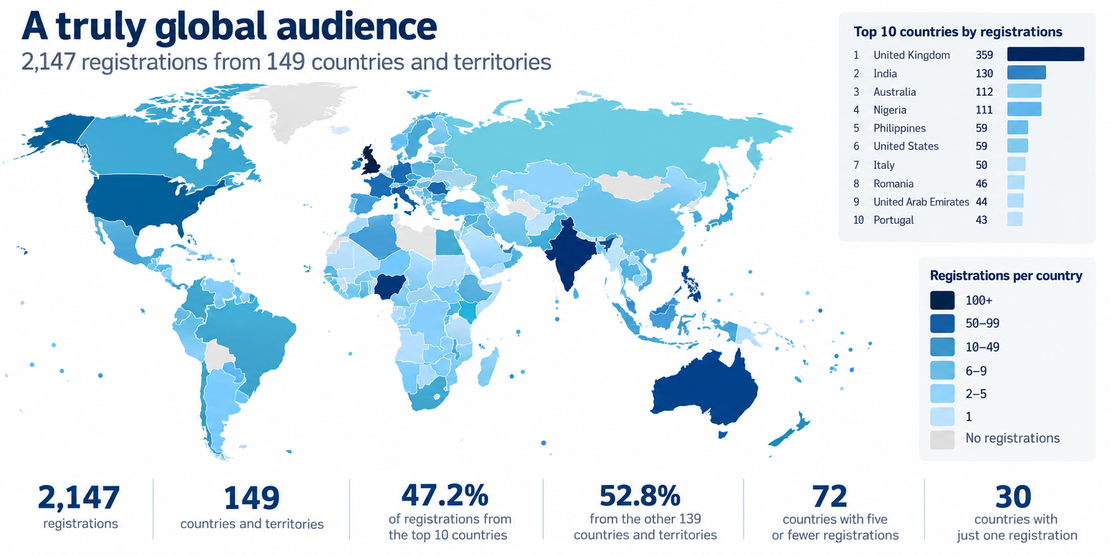
Virtual events eliminate geographical and political barriers, allowing participation from a global audience. Attendees who might be prevented from travelling due to instability can still take part and contribute.
✔ Cost efficiency
Travel, accommodation, and venue hire are major budget items – often with volatile pricing. Virtual events can dramatically reduce overheads, freeing up resources for content development, production quality, or outreach.
✔ Flexibility and accessibility
From live captioning and multilingual support to on-demand access and timezone-friendly scheduling, online formats are naturally more inclusive — and far easier to adapt as situations evolve.
✔ Data-driven insights
Unlike physical events, digital platforms capture rich engagement data. From viewing durations and poll participation to Q&A data, organisers can understand what resonates, and refine future events accordingly.
✔ Speed and control
Need to change the running order? Add a new speaker? Adapt content to reflect breaking developments? With virtual events, you stay in the driving seat.
Enhancing organisational resilience
Integrating virtual events into strategic planning isn’t just about crisis management; it’s about building a more agile, audience-focused organisation.
Whether you’re hosting policy briefings, stakeholder updates, training sessions or annual meetings, the ability to deliver high-quality virtual experiences strengthens your ability to stay visible, connected and credible, regardless of what’s happening in the wider world.
It also sends a message: your organisation is adaptable, digitally capable, and prepared to serve its audience through thick and thin.
Virtual events and political uncertainty: a Conclusion
As political landscapes continue to shift, virtual events represent more than just a contingency plan; they’re a strategic asset. They allow organisations to maintain momentum, strengthen relationships, and demonstrate leadership in uncertain times.
For associations, non-profits, and businesses alike, investing in robust virtual event strategies is no longer optional. It’s an essential part of staying relevant, responsive, and resilient.
Book a free virtual event strategy call.
Let’s talk about how we can help you stay connected, deliver impact, and future-proof your events …no matter what’s on the horizon.